What Are the Main Benefits of Silicone Render for UK Homes?
08.10.2026
Silicone render has become one of the most popular external wall finishes for UK homeowners, and it is not difficult to see why.
With Britain's unpredictable weather putting constant pressure on building exteriors, property owners need a solution that genuinely holds up over time. Silicone render benefits go well beyond aesthetics, offering real-world protection, low maintenance demands, and long-term cost savings that traditional rendering simply cannot match.
At Quality Render Ltd, our team has spent over 20 years applying silicone render to homes and commercial properties across Colchester and the wider Essex region, giving us a clear picture of how it performs across different property types and conditions.
Why Choose Silicone Render Over Traditional Rendering?
Silicone render outperforms traditional cement-based render in almost every practical category. Cement render is rigid, which means it is prone to cracking as a building naturally moves and settles over time. Those cracks allow water to get in, which creates damp issues that can quietly damage a property's structure before the problem becomes visible.
Silicone render is flexible by nature. It moves with the building rather than fighting against it, which is why it holds its finish so much longer. It is also breathable, meaning moisture trapped within the wall can still escape as vapour. This is a critical feature for UK homes, many of which are older properties where some level of moisture movement through the walls is normal and expected.
Traditional renders also tend to need repainting every five to seven years to keep them looking presentable. Silicone render, by contrast, is colour-through from the start, meaning the pigment runs throughout the material rather than sitting on the surface. The result is a finish that stays consistent for decades without needing a fresh coat of paint.

Outstanding Weather Resistance and Durability
Silicone render is built specifically for climates like the UK's, where a wall might face driving rain in the morning and direct sun by the afternoon. Its hydrophobic properties mean it actively repels liquid water at the surface.
Rather than absorbing moisture, the render causes water to bead and run off, keeping the wall beneath dry throughout even heavy rainfall.
Hydrophobic, in simple terms, means water-repelling. The molecular structure of silicone creates a surface that water cannot penetrate. This is what makes silicone render so effective as weather resistant render in a country where rain is a constant factor.
At the same time, the material remains microporous, which means water vapour from inside the wall can still pass through and escape. That balance between repelling liquid water and allowing vapour to move is what sets breathable render systems apart from sealed alternatives.
UV resistance is another important quality. The colour pigments used in silicone render are stable under prolonged sun exposure, so the finish does not yellow, fade, or chalk the way painted renders often do. Over 20 or 25 years, this makes a significant visual difference to the property.
Self-Cleaning Properties That Save Time and Money
One of the most practical silicone render benefits is its ability to clean itself. When rain hits the hydrophobic surface, it picks up dust, dirt, and organic matter rather than letting it stick and build up. This means the kind of green algae and dark staining that plagues traditional render rarely takes hold on a silicone finish.
For a property in a rural or coastal location where organic growth is more common, this makes a genuine difference. Owners of homes finished with traditional render often find themselves arranging professional cleaning every few years to remove biological growth. With silicone render, that maintenance need is dramatically reduced, saving both time and money over the life of the finish.
Long-Term Cost Efficiency and Low Maintenance
The upfront cost of silicone render is higher than basic cement render, and that is a fair point to acknowledge. However, when you look at the full picture over a 20 to 25-year period, the value proposition becomes very clear.
Traditional cement render typically needs repainting every five to seven years. Over 25 years, that means four or five repainting cycles, each with its own labour and material costs. Add in occasional repairs for cracking, cleaning treatments, and the disruption that comes with each visit, and the costs accumulate quickly.
Silicone render removes most of those costs entirely. Its colour is stable without repainting, its flexibility prevents cracking, and its self-cleaning surface reduces the need for professional cleaning.
A realistic 25-year cost comparison often shows silicone render delivering savings of several thousand pounds over its lifespan, particularly on larger properties. For homeowners in Colchester and across Essex, where property maintenance costs are a real concern, that long-term efficiency is a compelling reason to choose silicone.
Reduced Maintenance Intervals
Low maintenance rendering is one of the defining selling points of silicone, and the numbers back it up. A traditional painted render finish typically needs attention within five to seven years.
Silicone render, when professionally applied, can maintain its appearance and protective performance for 25 years or more without any intermediate treatment.
This is not just a cosmetic advantage. Every time a property needs scaffolding erected for repainting or repairs, there is a cost and a disruption involved. Reducing those events from four or five times over 25 years down to zero is a meaningful quality-of-life improvement for homeowners, and a practical benefit for landlords managing multiple properties.
Enhanced Energy Efficiency Through Improved Insulation
Silicone render is frequently applied as the outer layer of an external wall insulation (EWI) system. When this is the case, the combination creates a continuous thermal envelope around the building that significantly reduces heat loss through the walls.
For many UK homes, particularly older solid-wall properties that predate cavity wall construction, this is one of the most impactful energy upgrades available.
Research into EWI systems suggests that heating bills can fall by up to 35% when external wall insulation is properly installed with a quality render finish. For a typical UK household, that represents a saving of hundreds of pounds per year. Over the lifetime of the system, the energy savings alone can justify a significant portion of the installation cost, making render for energy efficiency one of the strongest arguments in its favour.
The insulation layer also improves comfort in ways that go beyond the heating bill. Walls stay warmer, which reduces condensation on internal surfaces and creates a more consistent temperature throughout the home. This is particularly noticeable in older properties that previously felt cold and draughty during winter months.
Wide Range of Colours and Finishes
Silicone render is available in a very wide range of colours, from neutral whites and greys to bolder contemporary shades. Because the pigment is mixed throughout the material rather than applied as a surface coat, the colour remains consistent even if the surface is lightly scuffed or weathered. There is no underlying grey cement visible if the surface takes a knock.
The range of available silicone render colours includes hundreds of options, and many manufacturers can match custom shades to suit specific architectural requirements or planning permission conditions.
This is particularly relevant for properties in conservation areas or for homeowners who want their property to complement a specific neighbourhood aesthetic.
Texture options are equally varied. Smooth and fine-textured finishes suit contemporary architecture, while coarser scraped or roughcast textures work well on older properties or in areas where a more traditional appearance is preferred.
Customisation Options for Every Property Style
Different property types benefit from different approaches to silicone render. Victorian terraces, for example, often look best with a fine scraped texture that references the era's original external finishes while offering modern performance.
Modern builds frequently benefit from smooth, clean finishes in crisp whites or warm greys that complement contemporary architecture.
Commercial properties have their own requirements, often needing a finish that can cover large surface areas consistently while remaining presentable over many years with minimal maintenance. Silicone render meets all of these needs.
The flexibility in application means it is not a one-size-fits-all product but rather a versatile system that can be adapted to the specific character of each project.
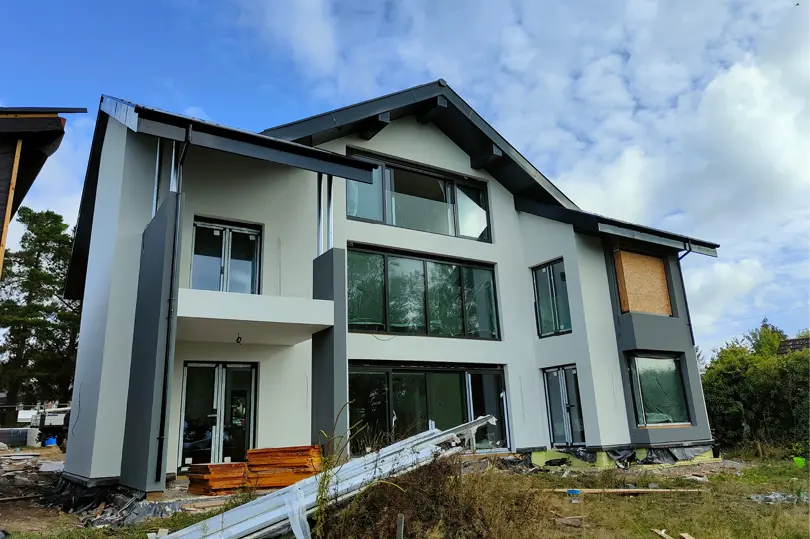
Breathability Prevents Damp and Mould Issues
Breathability is one of the most technically important properties of silicone render, and it is worth explaining clearly. A breathable render is one that allows water vapour to pass through it from the inside of the wall to the outside. This matters because all buildings contain some level of moisture, produced by occupants, cooking, washing, and other everyday activities.
If a wall is sealed with an impermeable coating, that vapour has nowhere to go. It builds up within the wall structure, leading to dampness, mould growth, and eventually structural deterioration. This is a particularly serious issue for older UK properties that were built with solid walls and designed to breathe naturally.
Silicone render's microporous structure keeps this vapour movement working as it should. Liquid water cannot get in from outside, but vapour can still get out from inside.
The result is a wall that stays dry on both sides, supporting healthy internal air quality and protecting the building fabric from moisture-related damage. For properties that have previously struggled with damp, this is often one of the most transformative improvements that external render can deliver.
Quick Application and Minimal Disruption
Professional installers can apply silicone render more efficiently than many traditional rendering methods. The material mixes consistently, handles predictably, and cures relatively quickly, which helps experienced teams complete projects to a reliable schedule. For homeowners, this means less time with scaffolding on the property and a faster return to normal routine.
The workability of silicone render also contributes to a higher quality finish. Because the material behaves consistently and applies evenly, skilled installers can achieve smooth, regular results across large surface areas without the inconsistencies that can appear with cement-based products.
This is particularly important on properties where the render finish will be highly visible from the street.
Environmental Benefits and Sustainability
Choosing modern rendering solutions like silicone render has a positive environmental dimension that is increasingly relevant to property owners thinking about their carbon footprint.
The primary environmental benefit comes from longevity. A render system that lasts 25 years or more consumes fewer raw materials over time than one requiring replacement or significant maintenance every five to seven years.
When silicone render is applied over an external wall insulation system, the energy savings delivered to the building reduce its carbon emissions over its operational lifetime.
A warmer home that requires less heating is a more sustainable home, and this aligns with the UK's broader targets for reducing carbon emissions from the built environment. The reduced need for cleaning chemicals and maintenance treatments is a smaller but still meaningful environmental benefit.
Increased Property Value and Kerb Appeal
External render benefits extend directly to property value. A freshly applied silicone render finish changes the appearance of a property dramatically, giving it a clean, modern look that photographs well and makes a strong first impression. For properties being prepared for sale, this visual impact can translate into a higher asking price and a faster sale.
Beyond aesthetics, the practical benefits of silicone render are increasingly understood by buyers and their surveyors.
A property with a high-quality, low-maintenance render system in place is a more attractive purchase than one with ageing painted render that will need attention within a few years. The combination of visual appeal and genuine practical value makes silicone render one of the more straightforward property upgrades available.
Is Silicone Render Suitable for Your Property?
Most UK properties are suitable candidates for silicone render, including solid brick, block, and stone-built homes, as well as properties with existing render that is in sound condition. Properties undergoing external wall insulation installation are particularly well-suited, as silicone render is the standard outer finish for EWI systems.
Some properties require preparatory work before render application. Existing render that is loose, hollow, or significantly cracked may need to be removed first. Any underlying moisture or damp issues should be identified and resolved before a new render system is applied.
A professional assessment from an experienced team such as Quality Render Ltd identifies these requirements upfront, ensuring the finished result performs as expected and the investment is fully protected.
For homeowners across Colchester, Essex, and the surrounding areas, Quality Render Ltd offers professional assessments and full installation services backed by over 20 years of hands-on experience in external render and insulation systems.
Frequently Asked Questions About Silicone Render
Silicone render typically lasts 25 years or more on UK properties when professionally applied and maintained. Its flexibility, UV stability, and hydrophobic surface mean it does not degrade at the same rate as traditional cement render. The colour remains consistent, and the surface does not require repainting throughout its lifespan, making it one of the longest-lasting external render options available.
Yes, silicone render can be applied over existing render in many cases, but only if the existing surface is sound, well-bonded, and free from significant cracking or damp issues. A professional will assess the condition of the existing render first. If it is hollow, loose, or contaminated, it will need to be removed before the new system is applied to ensure proper adhesion and long-term performance.
No. Silicone render does not need painting because the colour pigment runs throughout the material from the start. It also has self-cleaning properties that reduce the build-up of dirt and organic growth. Beyond an occasional visual inspection, most silicone render finishes require no active maintenance for many years, which is one of the primary reasons homeowners choose it over traditional painted render.
The initial cost of silicone render is higher than basic cement render. However, when you account for the cost of repainting, repairs, and cleaning that traditional render requires every five to seven years, silicone render becomes more cost-effective over a 20 to 25-year period. Many homeowners find the long-term savings are significant, particularly on larger properties.
Silicone render alone adds a modest degree of weather protection, but when applied over an external wall insulation system, it can contribute to heating bill reductions of up to 35%. The combination of insulation and silicone render creates a continuous thermal envelope around the property, reducing heat loss through the walls. This makes it a particularly effective upgrade for older solid-wall properties that have limited insulation options available.
Silicone render performs very well in British weather conditions. Its hydrophobic properties cause liquid water to bead and run off the surface rather than being absorbed, preventing rain from penetrating the wall. It is also flexible enough to accommodate the minor structural movement that properties experience during temperature changes, which prevents the cracking that typically affects rigid cement render. UV stability means the finish does not fade during sunny periods.
Silicone render is available in a very wide range of colours, with most manufacturers offering hundreds of standard shades and the ability to match custom colours. The pigment is mixed throughout the material, so the colour is consistent and stable without fading. If your property is in a conservation area or subject to planning conditions regarding external appearance, it is worth confirming your chosen colour with your local planning authority before installation begins.