What Are the Different Types of Exterior Wall Render Finishes?
05.11.2026
Exterior wall render finishes fall into several main categories: smooth, textured, scraped, roughcast, pebble dash, and silicone render. Each type differs in appearance, texture, durability, and how well it performs in different weather conditions. The right choice depends on your property style, location, and how much maintenance you want to deal with over time.
Why the finish of your render matters
The finish on your exterior walls is not just about how your home looks. It plays a direct role in how well your walls manage moisture, how long the surface holds up before it needs attention, and how straightforward it is to keep clean year after year.
A poorly chosen finish can lead to surface cracking, water ingress, or a look that simply does not suit the property. On the other hand, the right render finish can protect your walls for decades, reduce maintenance costs, and improve your home's kerb appeal significantly.
For UK homeowners, weather resistance is one of the most important factors. The UK's climate includes high rainfall, frost, and coastal salt exposure in many areas, all of which place real demands on exterior surfaces. Choosing a finish with the right properties for your specific location is just as important as picking one that looks good.
The finish also affects how breathable the wall surface is. Older properties built with solid masonry walls often need breathable render systems to allow moisture to escape from within the wall. Using the wrong finish on these buildings can trap moisture and cause long-term damage to the fabric of the structure.
The most common types of exterior render finishes
There are several established render finish types used across UK homes, each with its own strengths and ideal applications. The table below gives a quick overview before we go into more detail on each one.
|
Render Finish |
Texture |
Typical Use |
Key Benefit |
|
Smooth render |
Flat and even |
Modern homes |
Clean, contemporary look |
|
Scraped render |
Fine scratched texture |
Versatile |
Hides minor wall imperfections |
|
Textured render |
Medium variation |
Period and modern properties |
Good coverage, practical finish |
|
Pebble dash |
Coarse, stone-covered surface |
Traditional UK homes |
Durable, low maintenance |
|
Roughcast |
Uneven, thrown finish |
Exposed locations |
Weather resistant |
|
Silicone render |
Fine or medium texture |
New and existing builds |
Flexible, water repellent, long-lasting |
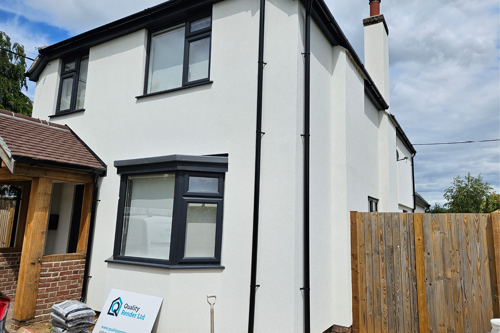
Smooth render finish
Smooth render gives walls a clean, flat surface with no visible texture. It suits modern and contemporary properties well and creates a sleek appearance that works particularly well alongside large windows, minimalist architecture, and lighter colour schemes.
The challenge with smooth render is that it demands very skilled application. Any unevenness, trowel marks, or surface inconsistencies are immediately visible once the render dries. For this reason, smooth finishes are best left to experienced renderers who can achieve a consistent result across the full surface area.
Smooth render can also show cracking more visibly than textured alternatives. In exposed locations, where walls face frequent wind, rain, or temperature changes, smooth cement-based render is more likely to develop hairline cracks over time. In sheltered spots and drier areas, it can perform very well.
If smooth render appeals to you but you are concerned about long-term performance, silicone-based smooth finishes are a strong option. They offer the same clean look with added flexibility and water repellence that traditional cement-based smooth render cannot match.
Textured and scraped render finishes
Textured finishes are created by working the surface of the render before it fully sets, usually by scraping, brushing, or rolling to create a consistent pattern or variation across the wall. Scraped render, in particular, is applied and then dragged with a tool to produce a fine, slightly rough texture.
One of the practical benefits of textured finishes is that they are much more forgiving of minor wall irregularities. If the underlying masonry has small imperfections, a textured finish will absorb those visually in a way that smooth render simply cannot.
Textured finishes also perform reasonably well in wet conditions. The surface variation helps water run off rather than sitting flat against the wall, which reduces the risk of penetrating damp over time. They are widely used across UK properties for this reason.
From an aesthetic point of view, textured finishes work across a wide range of property styles. They suit both older period properties and newer builds, depending on the depth and type of texture applied.
Roughcast and pebble dash
Roughcast and pebble dash are two of the most traditional render finishes used on UK homes, particularly in Scotland, Wales, Northern Ireland, and northern England. Both have a coarse, highly textured surface that offers genuine practical benefits in exposed locations.
Pebble dash is applied by throwing small stones, gravel, or pebbles onto a freshly applied render coat before it sets. The stones become embedded in the surface and create a distinctive rough texture. It is one of the most durable and low-maintenance finishes available, as the stone surface naturally sheds water and resists surface wear.
Roughcast is similar in principle but differs in how it is applied. The aggregate is mixed directly into the render before it is thrown onto the wall, rather than being added separately. This creates a slightly different texture but delivers comparable weather resistance.
Both finishes are well suited to properties in wet, windy, or coastal areas. They have been used on UK homes for well over a century, and many original pebble dash and roughcast finishes are still in good condition today where they have been properly maintained.
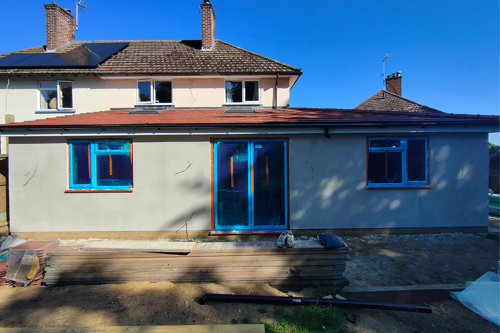
What is silicone render and how does its finish compare?
Silicone render is a modern render product made with a silicone-based binder rather than traditional cement. It is available in a wide range of colours and finishes, and it behaves very differently from conventional render once it is applied.
The most significant practical difference is that silicone render is flexible. Traditional cement render is rigid, which means it can crack as a building moves slightly with temperature changes or as the structure settles. Silicone render has enough flexibility to absorb minor movement without cracking, which makes it far more durable in the long run.
Silicone render is also highly water repellent. The silicone content causes water to bead and run off the surface rather than being absorbed into it. At the same time, it remains breathable, which is important for older solid-walled properties. This combination of water repellence and breathability makes silicone render particularly well suited to the UK's wet climate.
Another notable advantage is that silicone render stays cleaner for longer. Its surface resists algae, mould, and dirt build-up better than cement-based finishes, which means it retains its appearance with minimal cleaning. Many UK homeowners find that silicone render looks as good after ten years as it did when it was first applied.
At Quality Render Ltd, silicone rendering is one of our specialist services. With over twenty years of experience applying render systems to properties across Colchester and the surrounding areas, we have seen first-hand how silicone render outperforms traditional alternatives when it comes to durability and long-term appearance.
How to choose the right render finish for your property
Choosing the right render finish for your house comes down to a few key questions: What does your property look like? Where is it located? What is your budget? And how much maintenance are you prepared to do?
There is no single answer that works for every home. A finish that looks perfect on a new-build in a sheltered suburban street may not be the right choice for a Victorian terrace in a coastal town. Taking the time to match your choice to your specific circumstances will save you time and money in the long run.
Matching render finish to your property style
Traditional properties, including Victorian terraces, Edwardian semis, and older rural homes, generally suit textured or roughcast finishes. These carry visual weight and texture that feels appropriate alongside period features like sash windows, original brickwork details, or stone sills.
Modern homes tend to suit smoother finishes or fine-textured silicone renders. A clean, flat surface complements contemporary architecture and works well with bold or light colour choices. Silicone render in smooth or fine-textured finishes has become a popular choice for new-builds and refurbishments for exactly this reason.
Where a property sits in a wider street or estate also matters. In areas where most homes share a similar finish or colour, choosing something wildly different can affect kerb appeal and even property value. A render finish that sits comfortably within the neighbourhood character, while still making your home look its best, is usually the right approach.
Climate and weather considerations in the UK
The UK's wet, variable climate is one of the most important factors when choosing a render finish for your house. Properties that face significant rainfall, wind-driven rain, or salty coastal air need a finish that can handle sustained moisture exposure without deteriorating.
In high-rainfall regions such as Wales, the Lake District, and coastal areas of Scotland and Northern Ireland, a breathable and water-repellent finish is particularly valuable. Silicone render and properly specified roughcast finishes are both well regarded in these environments. Properties on exposed clifftop or hillside locations face even greater demands, and the choice of render system matters significantly in these cases.
In the drier southeast of England, where Quality Render Ltd operates from its base in Colchester, there is a little more flexibility. However, the UK's weather is unpredictable, and no region is completely free from frost, rain, or damp. Specifying a finish that handles moisture well is still good practice even in relatively sheltered locations.
According to data published by the UK Met Office, average annual rainfall across England is around 885mm. Properties in Wales and the northwest of England can see well over 1,500mm per year in some areas. These figures make it clear that water management is a core requirement for any exterior render system, regardless of where you live.
How long do different render finishes last?
The lifespan of an exterior render finish depends on several things: the type of product used, the quality of the application, the condition of the substrate it was applied to, and how well it is maintained.
Traditional cement render, when applied correctly, can last anywhere from 20 to 30 years. However, it is more prone to cracking than modern alternatives, and cracked render can let in moisture if the cracks are not attended to promptly. Regular inspection and minor repairs can extend its effective life considerably.
Pebble dash and roughcast finishes are among the longest-lasting of all render types. Original applications from the early twentieth century can still be seen on UK properties today in reasonable condition. Their coarse, aggregate-heavy surfaces handle the elements well and do not require frequent maintenance to stay in good shape.
Silicone render systems typically carry manufacturer guarantees of 20 to 25 years, and many perform well beyond that with minimal intervention. Their resistance to cracking, algae, and moisture absorption means they age much better than cement-based alternatives, particularly in wetter areas of the UK.
Smooth cement render tends to have a shorter effective lifespan in exposed locations, largely because cracking is more likely and more visible. In sheltered spots, it can hold up well for 20 years or more if the application was sound from the start.
Can render finishes be repainted or refreshed?
Many render finishes can be refreshed without a full strip-back and reapplication. Whether a refresh is possible depends on the current condition of the render, the type of finish, and what you want to achieve.
If your render is structurally sound but has faded, stained, or lost its colour, applying a masonry paint or a render coating is usually an option. This can revive the appearance at a fraction of the cost of full reapplication. However, this approach works best when the underlying render has no significant cracks, areas of delamination, or moisture damage.
Silicone render can be overcoated with compatible silicone-based products in most cases, which allows homeowners to update the colour or refresh the surface without removing the original finish. This is one of the practical advantages of choosing a modern render system from the outset.
If the render has widespread cracking, sections that sound hollow when tapped, or visible signs of damp penetration, refreshing the surface alone will not address the underlying problem. In these cases, full or partial reapplication is the more appropriate course of action. A professional assessment will quickly tell you which situation you are dealing with.
Render finishes and energy efficiency: is there a connection?
The render finish itself does not provide insulation. However, the render system it forms part of can contribute to the energy performance of your home, particularly when it is applied as part of an external wall insulation system.
External wall insulation involves fixing an insulation board to the outside of the wall and then applying render over the top. The insulation layer is where the thermal benefit comes from. The render finish on the outside protects the insulation and the wall beneath it, while also giving the property its final appearance.
When render is applied over external wall insulation, the choice of finish still matters for performance reasons. A breathable, water-repellent finish like silicone render protects the insulation layer more effectively than a finish that allows moisture to penetrate. If water gets into the insulation, it reduces the thermal performance and can cause longer-term damage to the system.
At Quality Render Ltd, we specialise in combining external wall insulation with silicone render finishes to create systems that deliver both energy efficiency and long-term weather protection. For homeowners looking to reduce heat loss and lower energy bills, this combination represents one of the most effective external improvements available. More information on external wall insulation and how it works alongside render finishes is available on our services pages.
Frequently asked questions
Pebble dash and roughcast finishes are among the most durable available, with some original applications lasting over a hundred years. Silicone render systems are the most durable modern option, typically lasting 20 to 25 years or more with minimal maintenance, and they outperform traditional cement render in wet or exposed conditions.
Yes, smooth render generally requires more attention than textured alternatives. Cracking and surface marks are more visible on a flat surface, and any inconsistencies in the original application become apparent over time. Textured finishes are more forgiving and easier to touch in if repairs are needed.
Start by considering your property's age, style, and location. Older properties tend to suit roughcast or textured finishes, while modern homes often work well with smooth or fine-textured silicone options. If your home is in an exposed or high-rainfall area, prioritise a finish with strong water repellence and breathability. A professional assessment from an experienced renderer can assess your building and recommend the best option.
Yes. Silicone render is available in a wide range of colours and can be supplied in smooth, fine-textured, or medium-textured finishes depending on the product and manufacturer. The colour is mixed through the render itself rather than painted on, which means it does not peel or fade in the same way that paint does.
This varies by finish type and conditions. Traditional cement render may need attention within 20 to 30 years, or sooner if cracking occurs. Silicone render systems often last 25 years or more before any significant work is needed. Regular visual checks, particularly after winter, allow you to catch minor issues before they develop into more serious problems.
In some cases, yes. If the existing render is in good structural condition, a new coat or compatible overcoat can be applied on top. However, if the existing render is cracked, hollow in places, or has damp behind it, removing it first is the right approach. Applying new render over a failing substrate will not solve the underlying issue and will likely result in the new finish failing sooner than it should.
Pebble dash remains a practical and durable choice, particularly for properties in exposed or high-rainfall areas. It handles moisture well and requires very little maintenance. Aesthetically, it suits traditional property styles and is widely used across Scotland, Wales, and northern England. If the appearance does not appeal, modern alternatives like silicone render offer comparable weather resistance with a wider range of finishes and colours.
Quality Render Ltd is based in Colchester and brings over twenty years of specialist experience in silicone rendering, external wall insulation, and exterior property improvements. We work with homeowners across Essex and the surrounding areas to help them choose and apply the right render system for their property.